Format comparison
AI cooler vs. traditional vending machine
Both put snacks and drinks within reach of your team. The mechanics underneath — and what that means for reliability, product range, and who deals with problems — are very different.
Reliability: no spirals, nothing to jam
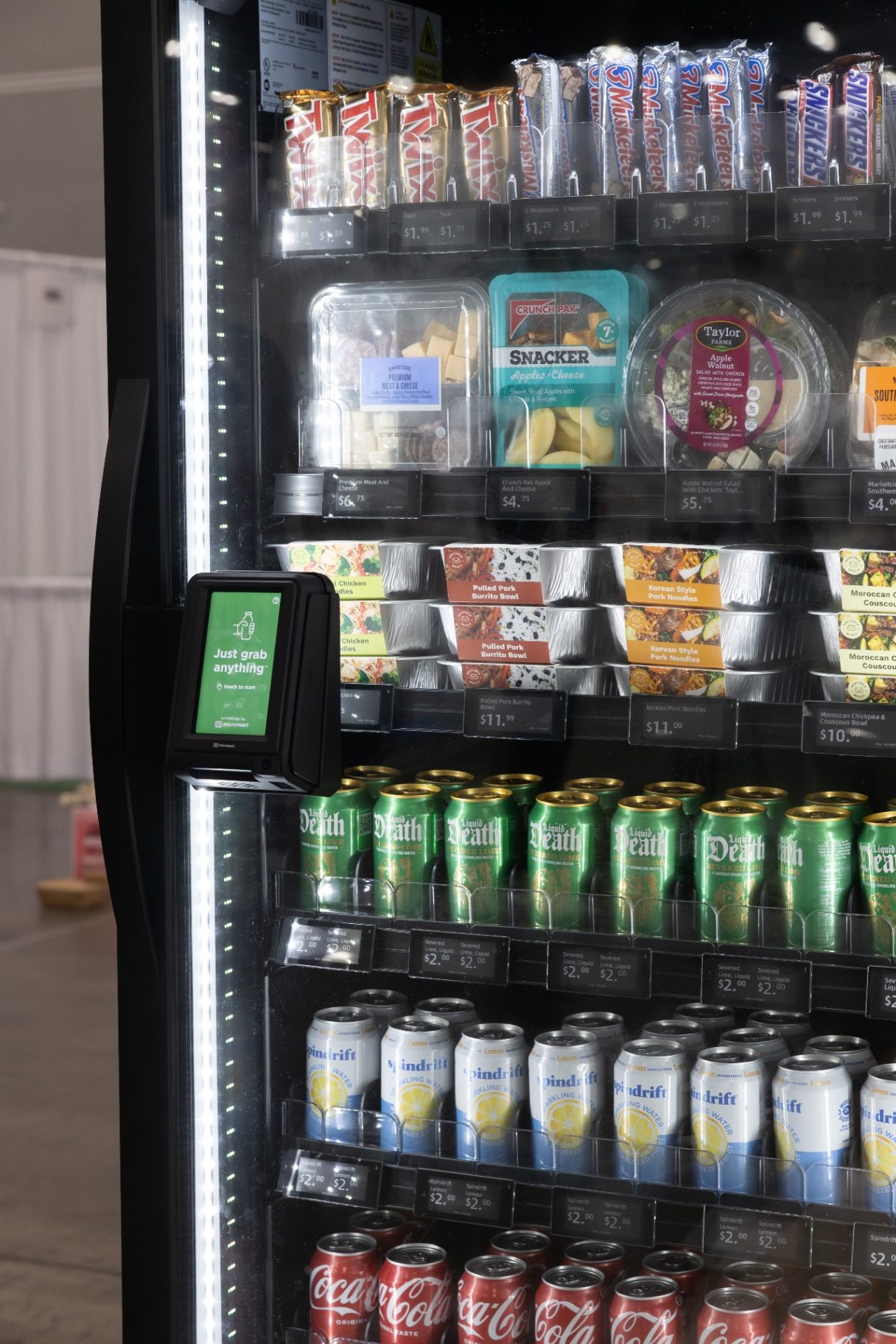
A traditional vending machine drops product off a spiral coil or a motorized shelf. Bags of chips ride up on the coil edge, cans drop at an angle and get stuck, and every jam turns into a refund conversation someone on your team has to handle. An AI cooler has no coil and no drop mechanism — the shelf is open, you take the item by hand, and there’s nothing mechanical between the product and the door that can fail.
Product range and multi-item purchases
Spiral and drop machines are built around one item per slot per transaction. Open shelving isn’t constrained that way — you can pick up a sandwich, a bag of chips, and a drink in a single visit and check out once. That also opens the door to product categories a coil machine simply can’t carry: soft packaging, irregular shapes, and refrigerated fresh food.
Shrink: measured, not estimated
Traditional vending shrink shows up as a gap between what was restocked and what the machine reports sold, usually reconciled on a route days or weeks later. An AI cooler’s vision and weight sensors record what left the shelf on every single open, so discrepancies are visible right away rather than averaged into a monthly loss estimate.
Checkout speed
Punching a code, waiting for the coil to turn, and hoping the item drops cleanly takes longer than it should. Tapping in, grabbing what you want, and walking out the moment the door closes is faster in practice, especially during a lunch rush when several people want to move through quickly.
What changes at the site
Footprint is comparable to a standard vending machine, though some AI coolers run a bit larger to accommodate open shelf depth. Power needs are the same standard outlet. The one addition is a network connection — Wi-Fi or cellular — to sync transactions and inventory. On service, the difference is who’s accountable: with Flyby, restocking and cleaning follow actual usage data, and refund requests essentially disappear because there’s no jam to refund in the first place.
Side-by-side comparison
Frequently asked questions
Is an AI cooler more reliable than a traditional vending machine?
Yes, mechanically. There’s no spiral coil, no drop mechanism, and no motorized part that can jam on an item. The most common vending complaint — paid for something that got stuck — doesn’t happen with an open-shelf cooler.
Can an AI cooler hold fresh food?
Yes. Refrigerated open shelving is well suited to sandwiches, salads, cut fruit, and yogurt — items that don’t work well in a spiral or drop-style machine.
How is shrink handled differently?
Traditional vending shrink is usually estimated after the fact from cash and restock counts. An AI cooler measures shrink directly — vision and weight sensors record what left the shelf on every open, so discrepancies are visible immediately rather than discovered weeks later.
Does an AI cooler need anything extra installed at my site?
It needs a standard power outlet and a network connection, the same as a modern card-reading vending machine. Flyby validates power and connectivity during the site walk before installing anything.
Who restocks and services the cooler?
Flyby does, on a route built from real usage data — not a fixed weekly stop regardless of what actually sold. The site never has to handle restocking, cleaning, or refund requests.
See an AI cooler next to your current vending setup
Tell us about your site and we’ll show you what a Micromart cooler would replace — and whether it qualifies for no-cost placement.
Tell us about your site.
If you're a fit, we'll be in touch within one business day to schedule a quick site review.
No-cost placement review for qualified locations.
Lead goes straight to our team.
Exclusive Micromart placement only.
Serving Dallas–Fort Worth
Flyby places and services machines across the Metroplex. Start with your city or the service that fits your building.
- Office vending serviceManaged vending and micro markets for DFW workplaces.
- Warehouse vending serviceRound-the-clock options for industrial and logistics sites.
- Apartment vending machinesOn-site convenience for multifamily communities.